Microfluidic devices designed to work, and to be manufactured.
I design, build and test custom microfluidic devices in my own studio lab. Verified hardware in days, and a clear route to volume production before you commit to tooling.
Experience across applications.
| Therapeutics | mRNA manufacturing platforms LNP & liposome synthesis Cell separation & sorting |
| Diagnostics | IVD point-of-care cartridges cfDNA capture & enrichment Molecular assay platforms |
| Advanced Processing | Tangential Flow Filtration (TFF) Precision micromixing Electrowetting on dielectric (EWOD) |
| Complex Consumables | Multi-step Lab-on-a-Chip Microfluidic well plates Perfusion cell culture |
Where are you starting?
Fabrication-ready design
- You have an assay protocol, sketch, or paper and need a working microfluidic architecture.
- You build in-house or with a preferred supplier and want a practical, buildable design.
Tested prototypes in your lab
- You need custom prototypes in your lab within days, or to fix a design that isn't performing.
- You want a device that is functionally tested to deliver the fluidic performance you need.
From prototype to production
- You have a working prototype and are preparing for pilot or volume manufacturing.
- You want to de-risk high-volume production before committing to expensive tooling.
Open demonstrators.
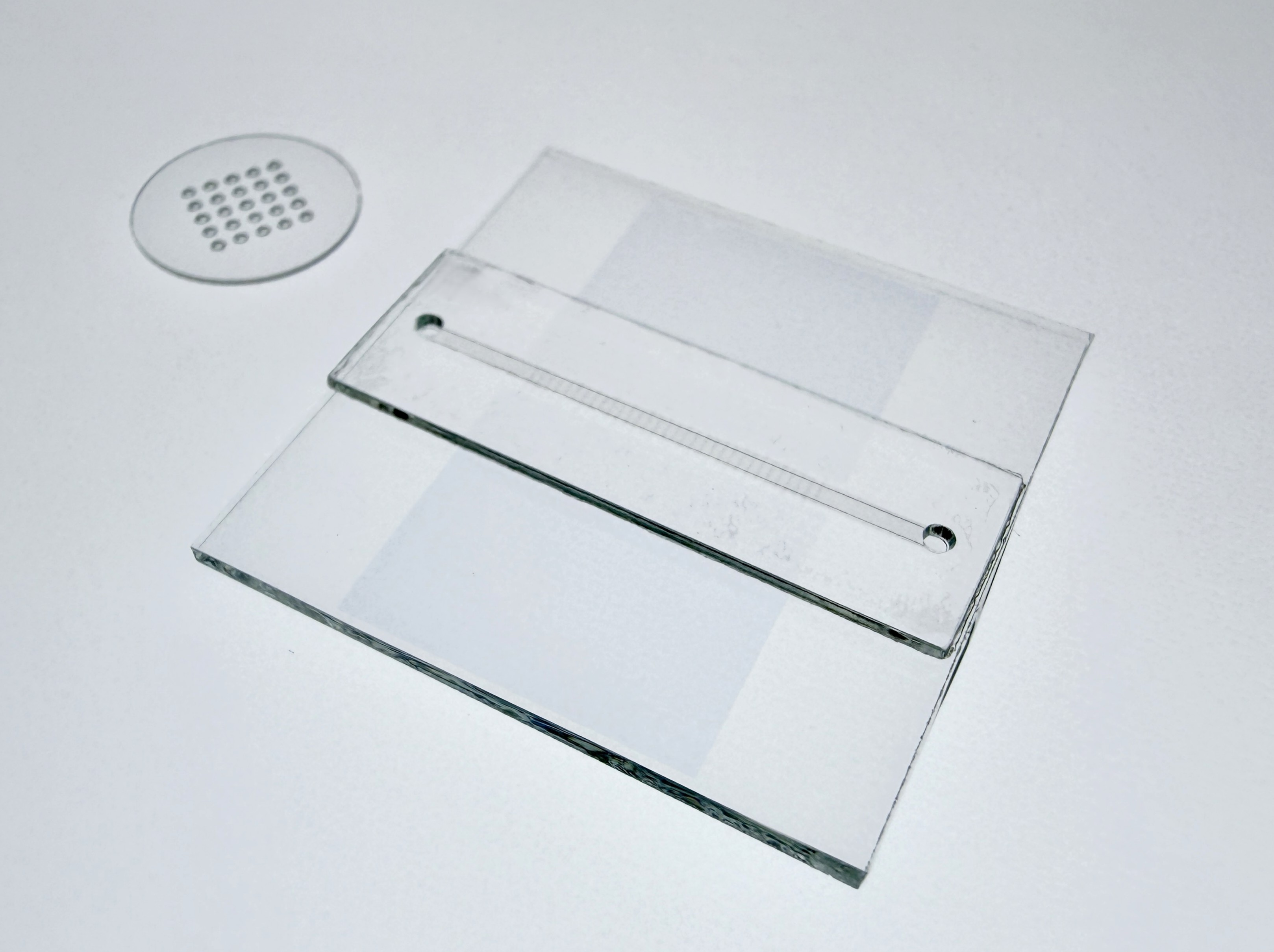
Client work is confidential, so I build open demonstrators, each with its build method and test results. Three are below; all of them are on The Bench
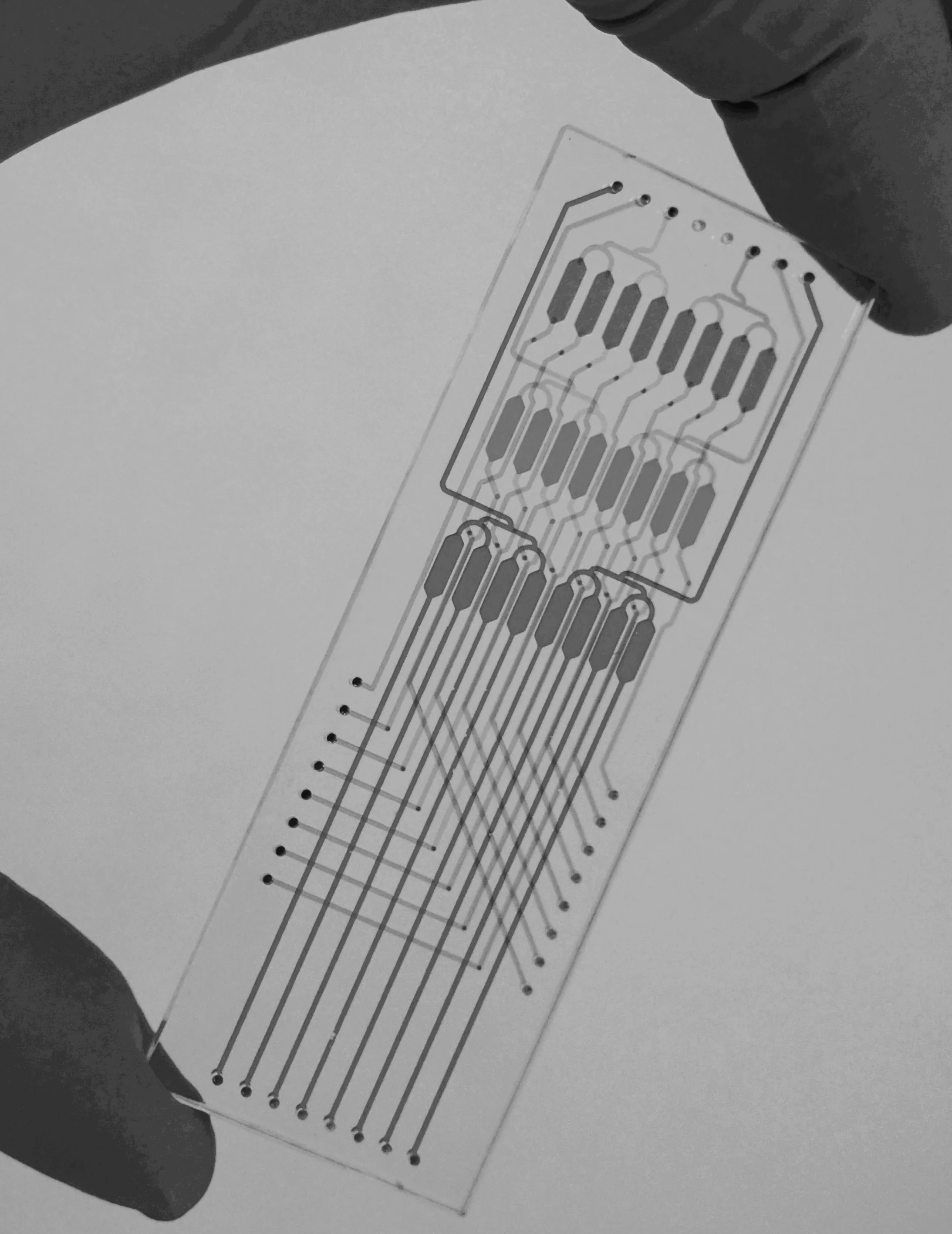
Laser-Patterned DEP Cell Trapping Chip
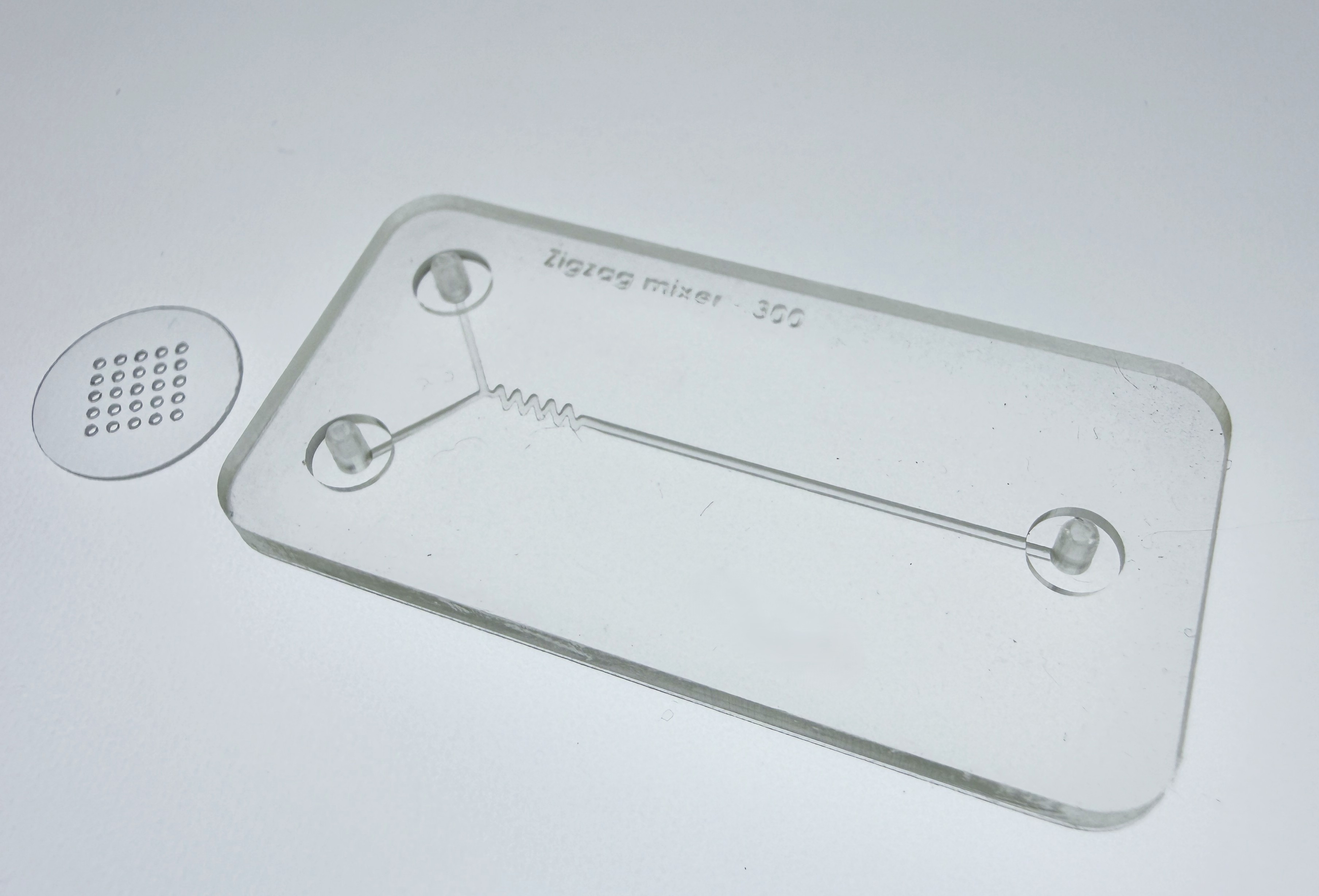
Advective Zigzag Micromixer
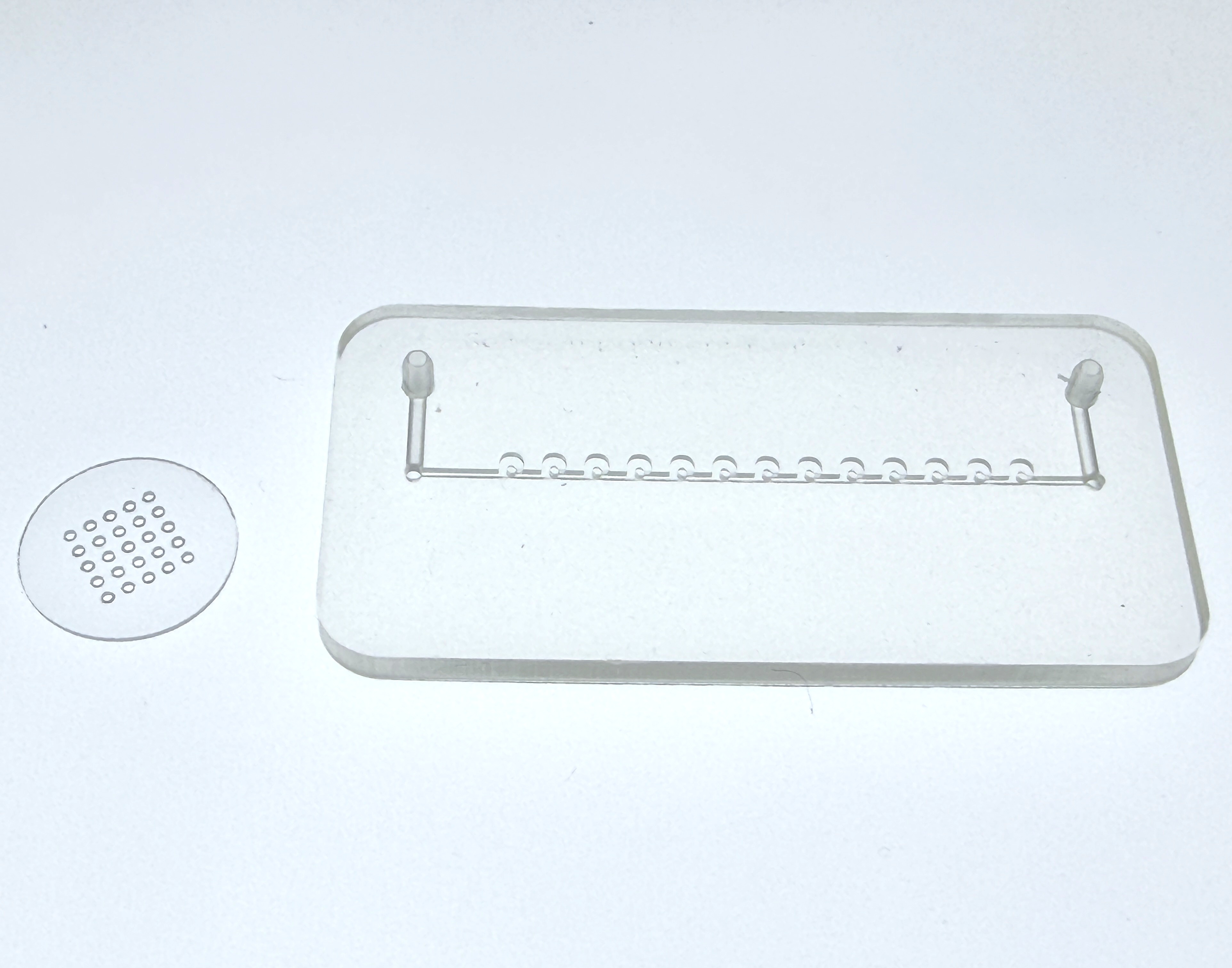
Passive Self-Compartmentalisation Array
Who you'll be working with.
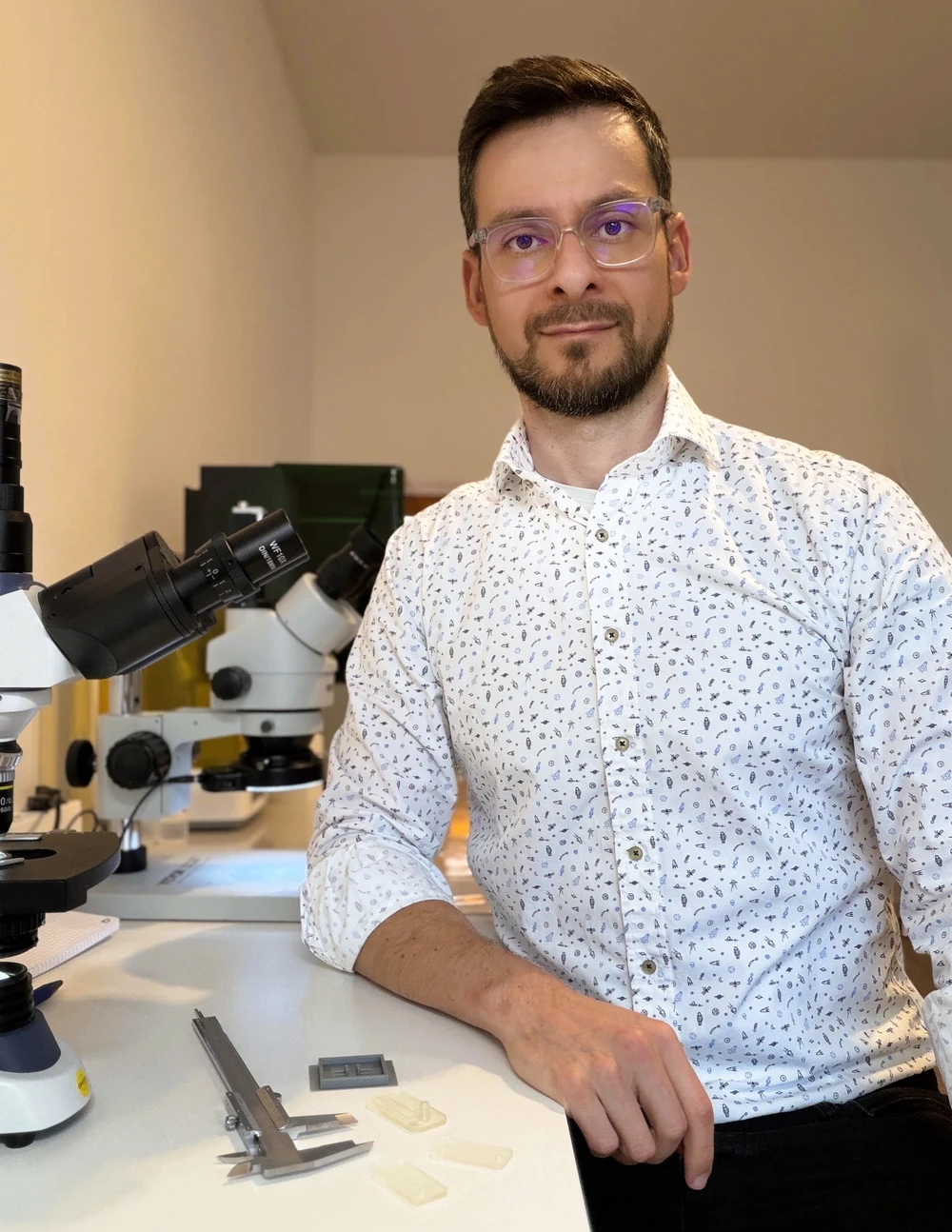
I'm Alvaro Conde, PhD. Trained in biomedical engineering, for 16 years I have designed, built and tested over 1,500 microfluidic devices alongside biologists, chemists, physicians and engineers. That includes six years inside a European ISO 13485 manufacturer, where I learned what fails in production and what drives unit cost.
Systems thinking, rapid iteration. I design the fluidics around the whole system: assay, reagents, electronics, optical readout and handling. I validate in days, not months, so you can test with your own biology or chemistry right away and iterate until it works.
Independent by design. Unbound to any single foundry, material, or fabrication method, the architecture is chosen strictly for your assay: glass, thermoplastics, laminates, or 3D printing. When ready to scale, I de-risk and transfer the design to the right manufacturer.
Specialized partner network. For complex instrument and cartridge programs requiring capabilities beyond fluidics (such as embedded electronics, CFD simulation, optics, assay development, or full system integration), I collaborate with trusted partners across the EU, US, and Asia.
Frequently asked questions.
What is a de-risking studio?
The step between a working idea and a production order. Before you pay for tooling or commit to a manufacturer, two questions need answers: does the device work, and can it be made at volume? I answer both with tested hardware, typically 3 to 10 prototypes per project. That makes me neither a prototyping shop nor a manufacturer. For 50–100 identical parts of a frozen design, I’ll refer you to a fabrication shop. For volume, I prepare the design for moulding and hand it to the manufacturer.
How do you functionally test prototypes? Do we send you our biological samples?
Usually, no. Shipping sensitive biologicals or clinical samples slows projects down. Instead, I validate the fluidic function in my lab using optical dyes, microparticles, or safe model systems such as yeast or standard proteins, and try to match the key physical properties of your liquids when needed. You receive hardware that is proven to flow, mix, or meter as intended, ready for you to run the actual assay in your own lab.
Will results from my prototype hold in a moulded part?
Geometry-driven behaviour largely does, such as mixing, focusing and residence time. Material-driven effects (surface wetting, capillary valves, autofluorescence, absorption) depend on the polymer, so I check them early. Whenever possible, I mill test devices in the target material, or coat 3D-printed parts to mimic its surface. The first moulded parts give the final confirmation.
A manufacturer referred me to you. Why couldn’t they take my project yet?
Usually because the design isn’t ready to quote. A device that works in the lab often can’t go straight to volume production. The materials, the assembly and bonding steps, and sometimes the architecture itself have to change for moulding and automated production. Working that out is development work, which doesn’t fit a production line. That’s the step I cover: I adapt and verify the design, then hand it back to the manufacturer who referred you, ready to quote.
Who owns the intellectual property and the CAD files?
You do, 100%. All designs, native CAD files, drawings and fabrication notes are handed over to you in full on completion, with no licensing fees or royalties.
Are you available for longer engagements?
Yes, as capacity allows. Beyond focused projects, I support teams through development retainers, advisory roles, grant work packages and fractional microfluidics leadership.